R.I.P. Paper Job Cards: Why Car Collision Repair is Going Digital
For decades, the physical paper job card was the undisputed, grease-stained king of the collision repair workshop floor. But in 2026, where precision, speed, and digital transparency are paramount, that king isn’t just dead—it’s actively holding your business back. Relying on paper in a modern collision shop is inefficient, prone to costly errors, and creates a major communication barrier.
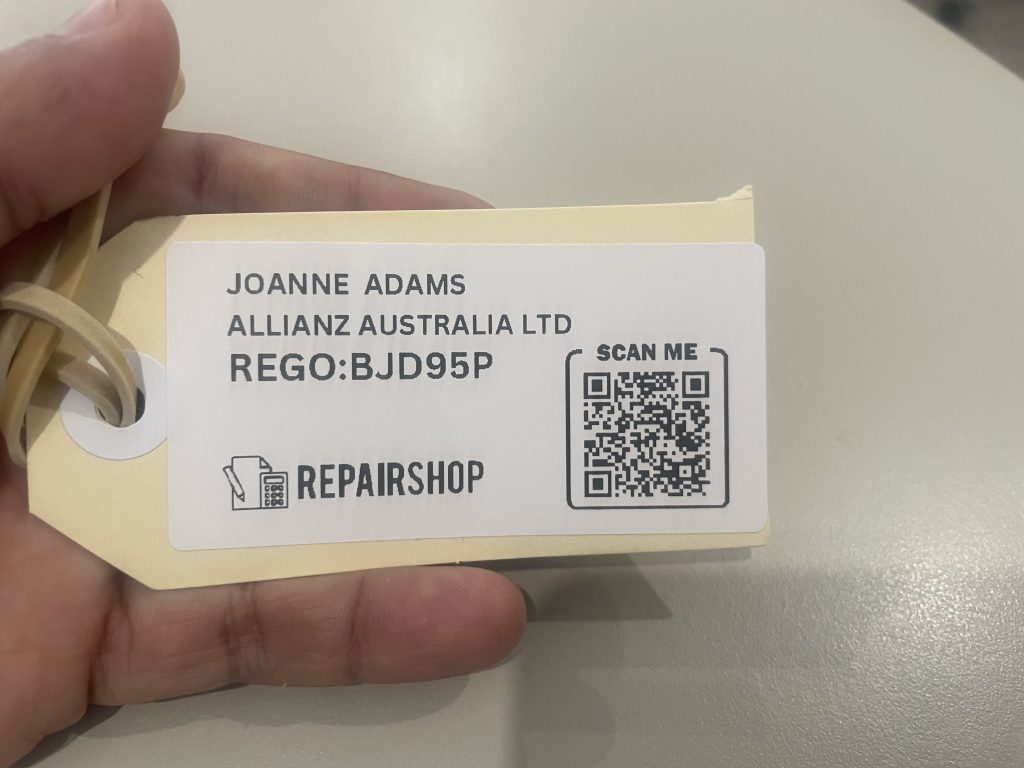
It’s time for a revolution. The paper job card is dead, and the durable, clean digital key tag—complete with a powerful, secure QR code—is the future-proof solution that eliminates decades of workshop friction.
The Paper Problem: Chaos, Delays, and Costly Mistakes
Let’s face it, a paper-based system on a busy collision floor is a liability, not an asset.
1. Illegibility is an Operational Nightmare
Imagine a critical structural alignment specification or an intricate ADAS calibration procedure noted in scrawled, greasy handwriting. A technician misreads “check sensor alignment” as “disconnect sensor,” leading to hours of wasted time, expensive re-work, and potential safety issues. Illegible handwriting is the single biggest contributor to administrative errors and delayed repairs in a paper-based shop. In an industry where microns matter, guessing at handwriting is unacceptable.
2. Physicality Breeds Fragility and Job-Stopping Delays
A paper card is just one grease stain, coffee spill, or misplacement away from a total knowledge black hole. If a parts order for a complex aluminum panel is noted on the back of a coffee-stained card and then lost, that job grinds to a halt. The parts manager has no record, and the vehicle sits. This creates a fragmented system where parts sourcing is reactive, not proactive, and data inconsistencies are common.
3. Status is Reactive, Not Proactive
With paper, management has zero real-time visibility. A job might sit in a ‘Paint Complete’ tray for hours before the next technician even knows it’s ready. The customer, expecting updates on their car’s repair journey, gets nothing but a vague “it’s in progress.” A paper-based system can only provide reactive updates, not the proactive, transparent communication that modern customers and insurers demand. This directly impacts customer trust and satisfaction.
4. The misplaced job card
The lost jobs card happens not matter the folder, the clipboard, the clear plastic sleave that its put into. Its a workshop floor hazard when the part on which the job card is left gets in the way. Now the job card as KEY TAG, well thats one thing that never gets lost or misplaced is the customers Key.
The Digital Solution: Instant Access, Precision, and Real-Time Workflow Control
A modern, cloud-native digital key tag system completely reimagines this workflow. The key tag, securely held by the customer’s key, is no longer just an identifier; it’s the immediate, secure digital gateway to the entire job.
repair-shop.com.au, built specifically for the local market, understands the power of this instant, secure connection. Your estimators generate an accurate, professional estimate, and this data forms the basis of the digital job card.
1. Instant, Error-Free Data Access via QR Code
A simple QR code scan on the key tag opens the comprehensive Digital Job Card instantly, on any mobile device. There is no illegible handwriting to misread. Every specification, parts list, and repair method—from complex structural work to refined refinishing—is perfectly legible. Technicians get the right information, every time, drastically reducing diagnostic and repair errors.
2. Real-Time Proactive Updates and Technician Productivity
A digital job card is updated in real-time. When a technician finishes the panel beating stage and clicks ‘Complete,’ the workshop dashboard updates instantly. The next technician knows immediately that the job is ready. The parts manager is notified in real-time about parts requests. The customer can receive an automated status SMS.
This proactively optimized workflow eliminates bottlenecks, streamlines internal processes, and significantly boosts technician productivity and asset utilisation. Accurate, digital time-tracking gives you precise data on labor costs, empowering you to refine job costing and identify profitability gaps.
3. Adaptable Workflow for Non-Standard Repairs (Adaptability)
A robust digital system isn’t limited by rigid paper boundaries. repair-shop.com.au lets you take control with fully customizable workflow tracking stages. This inherent flexibility is crucial for handling non-standard repairs. For example:
- Motorbikes: A scan of a motorbike key tag can open a dedicated digital card with optimized workflow stages for fairing repair/replacement sourcing, motorcycle-specific color matching, and frame integrity checks.
- Caravans: A caravan tag can feature a pre-built workflow tailored for its unique utility systems, specialized parts sourcing, and comprehensive safety inspections.
While cars are your primary focus, this built-in adaptability means you never have to force-fit specialized repairs into a rigid system, keeping those unique jobs efficient and productive.
Conclusion: Don’t Let Paper Define Your Future
The automotive industry is moving fast. Cars are more complex, insurers require deeper documentation, and customers expect a seamless digital experience. Relying on slow, fragmented, and error-prone paper systems is a liability you can’t afford.
R.I.P. to the paper job card. The durable digital key tag, providing instant, secure access to a proactively managed digital job card, is the clear path to a modernized, productive, and future-ready workshop. Future-proof your shop with software that lets you map your unique road to success. Take control of your workflow, and you take control of your future.